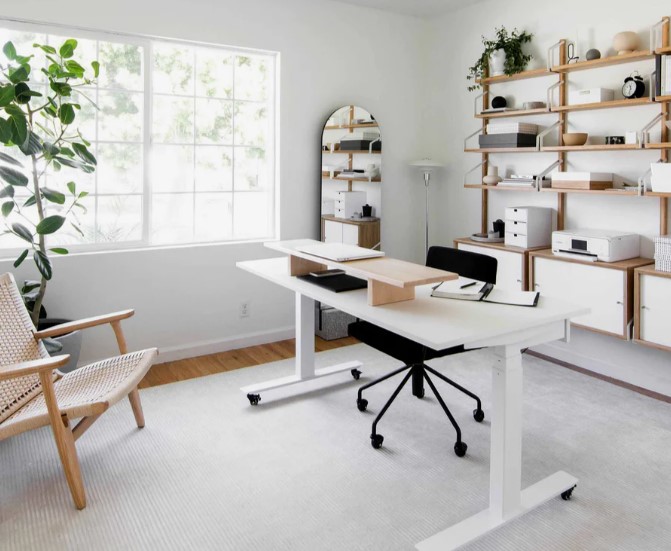
The relationship between physical environment and cognitive performance is not aesthetic—it is neurological. Princeton neuroscience research demonstrates that clutter forces the visual cortex to process irrelevant items, depleting neural resources available for focused work. Each extraneous object in your field of vision consumes working memory; visual distractions reduce cognitive capacity for the task at hand.
Conversely, minimalist workspace design—characterized by visual simplicity, strategic elimination of clutter, and intentional sensory management—enhances focus, decision-making, and creative output through neuroarchitectural principles. Participants in clean environments were twice as likely to demonstrate self-control and make optimal decisions compared with those in cluttered rooms.
This report synthesizes neuroscience research on environmental psychology with practical minimalist design principles to show how reducing visual noise, optimizing lighting, managing sensory input, and incorporating specific design elements create workspaces that measurably enhance creativity and sustained focus. The evidence reveals that minimalism is not visual austerity—it is cognitive optimization.
The Neuroscience of Clutter: Why Mess Destroys Focus
Visual Cortex Overload
When multiple objects occupy your visual field, they compete for neural representation in the visual cortex. Your brain is evolutionarily wired to scan surroundings for threats and resources, a system that still operates beneath conscious awareness. In a cluttered environment, this scanning system activates continuously, consuming metabolic resources that should be allocated to your primary task.
The mechanism: When you see a stack of papers, unfinished projects, or random objects on your desk, your brain registers their presence even if you consciously “ignore” them. These visual stimuli function as attention magnets, constantly pulling neural processing away from focused work. The brain cannot simply dismiss these items; it must expend energy to suppress them.
Cognitive Load and Working Memory Depletion
Working memory—the brain’s “sticky note” system—holds information you need in the next 10–20 seconds. It has finite capacity. When your environment contains clutter, each extraneous object consumes a portion of that capacity, leaving less available for actual work.
Research finding: Studies describe clutter as visual distraction that increases cognitive overload and reduces working memory capacity. The practical result: you forget things you just read, lose your train of thought more frequently, and struggle to hold multiple concepts simultaneously—all because your working memory is partially occupied suppressing visual distractions.
This explains why the same person working at a clean desk versus a cluttered desk shows measurably different cognitive performance. It is not willpower or motivation; it is available neural bandwidth.
Decision Fatigue and the Zeigarnik Effect
Beyond cognitive load, clutter creates decision fatigue: every item represents an unfinished task or unresolved choice.
The Zeigarnik Effect (Bluma Zeigarnik, 1927): The brain becomes preoccupied with interrupted or unfinished tasks, creating cognitive background noise. Each item in your environment—papers to file, things to fix, objects to relocate—triggers this effect, filling your mind with low-level unresolved tension that prevents true focus or relaxation.
Practical consequence: Your brain is subtly distracted by the mounting pile of “decisions” represented by clutter, even while consciously trying to focus on your current task.
Stress and Cortisol Elevation
Clutter is an environmental stressor that triggers elevated cortisol (stress hormone). The brain interprets disorder as potential threat—a signal that the environment is not safe and controlled. This initiates a low-grade stress response, elevating alertness at the expense of deep focus and creativity.
The stress feedback loop: Clutter creates stress. Stress depletes the energy needed to declutter. Mess accumulates. The cycle intensifies.
The Minimalist Solution: How Simplicity Enhances Performance
The Design Principle: Reduction of Visual Noise
Minimalist workspace design operates on a core principle: eliminate every element that does not directly support your primary task. The goal is not austerity or cold emptiness, but rather intentional curation.
What minimalism removes:
- Extraneous objects competing for attention
- Visual clutter that triggers decision fatigue
- Incomplete tasks visible in your field of view
- Sensory overstimulation
What minimalism preserves:
- Essential tools and materials
- Natural elements (plants, natural light)
- Comfort and warmth
- Elements that support focus and creativity
The result is a workspace that feels calm and spacious rather than sparse or cold.
The Science of Neuroarchitecture
Neuroarchitecture is the application of neuroscience principles to architectural and interior design. It treats every design element—lighting, color, acoustic properties, spatial layout—as a sensory intervention that acts on the nervous system.
Key neuroarchitectural principles:
- Sensory control: The brain continuously processes environmental signals. In cluttered, overstimulating spaces, the nervous system remains in heightened alert. In controlled, minimalist spaces, the nervous system can relax and focus.
- Cognitive security: Order signals safety to the brain. Disorder signals threat. Minimalist design communicates environmental control, allowing the prefrontal cortex to focus on higher-order tasks rather than threat-scanning.
- Autonomy: People perform better when they control sensory input. Minimalist spaces that allow you to manage lighting, sound, and visual elements support autonomy and reduce stress.
Core Elements of a Minimalist Workspace
1. Visual Clarity: The Power of Simplicity
Desk Surface:
- Clear desktop: Only items in active use remain on the surface
- Everything else: Stored in drawers or closed shelving (out of visual field)
- Result: Working memory is freed; visual attention can focus on the current task
Implementation: Before starting work, remove all but three items: computer, notebook, and pen (or whatever your current task requires). When transitioning to a different task, clear the desk. This ritual signals to your brain that you’re moving into focused work mode.
Why it works: Each visible item consumes neural resources through the Zeigarnik Effect. Minimizing visible items minimizes this drain.
2. Color Palette: Strategic Use of Muted Tones
The neuroscience of color: Color influences mood, focus, and cognitive processing.
Recommended palettes for focus workspaces:
| Color | Effect | Use Case |
|---|---|---|
| White/Off-White | Clarity, spaciousness, mental openness | Primary walls; creates sense of expanded space |
| Soft Gray | Calm, neutral, reduces visual stimulation | Secondary walls; accent elements |
| Soft Beige/Taupe | Warmth without stimulation; grounding | Furniture, accents |
| Light Blue | Cognitive focus, analytical thinking, calm | Accent elements (lamp, small furniture) |
| Warm Wood Tones | Natural, grounding, warmth without stimulation | Desk, shelving, flooring |
What to avoid: Bright, saturated colors (red, neon, highly saturated yellow); busy patterns; overly warm/stimulating tones.
Why it works: Neutral tones reduce visual stimulation, allowing sustained focus. Strategic color accents (light blue for cognitive tasks) support specific mental states without overwhelming the system.
3. Lighting: Natural Light and Controlled Illumination
Natural light has profound effects on cognitive performance and well-being:
- Regulates circadian rhythm (sleep-wake cycle)
- Increases alertness and focus during work hours
- Supports better sleep at night (through melatonin regulation)
- Boosts mood and mental clarity
- Improves overall health outcomes
Implementation:
- Position workspace near window: If possible, face toward natural light (not direct glare on screen)
- No obstruction between you and light: Keep windows unobstructed; avoid blocking natural light with furniture
- Supplement with task lighting: Use warm-white (2700K), dimmable LED lamp for evening or low-light conditions
- Avoid harsh overhead lighting: Overhead fluorescent lights create stress and glare; use them minimally or not at all
Color temperature matters:
- Cooler light (blue-white, 5000K): Supports analytical thinking and concentration
- Warmer light (amber, 2700K): Supports relaxation and creative ideation
- Adjustable lighting: Ability to change temperature throughout day supports autonomy
Why it works: Lighting acts as a neurochemical signal. Natural light and warm evening light synchronize with the brain’s circadian system, supporting focus when needed and relaxation when appropriate.
4. Biophilic Elements: Strategic Use of Nature
Research on biophilic design (incorporating nature into built environments) reveals measurable benefits:
Plants in workspace:
- Improve air quality (absorb CO₂, release O₂)
- Reduce stress and anxiety
- Enhance mood and psychological well-being
- Signal biological vitality, triggering positive neural response
- Add visual interest without clutter
Implementation:
- Minimum: One large plant (floor-level, in corner or beside desk)
- Moderate: Two to four plants (mixed sizes; one near workspace, one or two in background)
- Key principle: Plants should occupy negative space (corners, beside furniture) rather than competing with work area
- Low-maintenance varieties: Pothos, snake plant, ZZ plant (survive in various light conditions)
Natural materials:
- Wood surfaces: Warm, psychologically grounding, reduces stress
- Natural fibers: Cotton, linen, wool (in rug, cushion, if present)
- Stone or clay: Adds organic texture without visual clutter
Why it works: Evolutionary psychology: humans evolved in natural environments. Neural systems respond positively to biological elements. Nature signals safety and restoration.
5. Acoustic Control: Managing Sensory Overload
Background noise: Research shows that complete silence can impair creative thinking, but excessive noise destroys focus.
Optimal noise level: Moderate ambient noise (around 70 decibels) enhances creative cognition for most people. This is similar to a quiet coffee shop—enough background activity to stimulate thinking without distraction.
Implementation for minimalist workspace:
| Noise Level | Solution | Use Case |
|---|---|---|
| Too quiet (all silence) | White noise machine, ambient music, nature sounds | Creative ideation, brainstorming |
| Too loud (> 75dB) | Noise-isolating headphones, acoustic panels, closed door | Deep focus work, analytical tasks |
| Optimal (70dB) | Moderate ambient noise, light background music | General work, mixed tasks |
Acoustic materials for minimalist design:
- Soft furnishings (rug, cushion) absorb sound naturally
- Acoustic panels (minimal aesthetic; hide behind furniture if needed)
- Heavy curtains (double benefit: sound absorption + light control)
- Closed door or white noise to mask external sounds
Why it works: Sensory overload (excessive noise) keeps nervous system in alert state, draining mental resources. Optimal noise level (moderate ambient) stimulates creative cognition without overwhelming.
6. Ergonomics: Supporting Physical Comfort
Discomfort is a constant source of distraction and stress. Ergonomic minimalism combines comfort with visual simplicity:
Essentials:
- Chair: Supportive, no-frills design; neutral color
- Desk: Appropriate height (elbows at 90°); substantial enough to feel stable
- Monitor: At eye level; arm’s length away
- Keyboard and mouse: Positioned to allow neutral wrist alignment
Minimalist aesthetic:
- Single-color, simple furniture without busy details
- Minimal visible cables (bundle and hide using clips, tubes, or boxes)
- One multi-function piece rather than multiple objects (e.g., shelving that combines storage and display)
Why it matters: Physical discomfort is a constant source of cognitive distraction and stress. Proper ergonomics removes this distraction, freeing mental resources.
The Minimalist Workspace Design Framework
Step 1: Audit and Declutter (Weeks 1–2)
Process:
- Remove everything from workspace (desk, shelves, visible areas)
- Evaluate each item: Does this directly support focus or creative work?
- Keep only:
- Computer/technology actively used
- Writing materials (pen, notebook)
- One meaningful object (photo, plant, small art)
- Organizational tools (calendar, task board—if minimal)
- Everything else: Store in closed drawers or remove from workspace
Practical principle: If you have not used it in the last week, it does not belong on your desk.
Outcome: Visual clarity; reduced cognitive load; psychological fresh start.
Step 2: Establish Storage Systems (Week 2–3)
Principles:
- Everything has a designated place
- Items are stored in closed containers/drawers (out of visual field)
- Frequently used items are within arm’s reach; rarely used items are further away
- Labeling is minimal but clear (e.g., drawer labeled “supplies”)
Implementation:
- Desk drawers: Organize by category (writing, office supplies, documents)
- Closed shelving: Files, archived projects, reference materials
- Cable management: Use clips, tubes, or boxes to bundle cords; hide behind furniture
Why it works: Storage removes decision-making burden (“Where does this go?”) and visual clutter while ensuring you can access needed items quickly.
Step 3: Optimize Lighting and Environment (Week 3–4)
Actions:
- Evaluate natural light access; position desk to maximize it
- Install dimmable warm-white task lighting if natural light is insufficient
- Remove or minimize harsh overhead lighting
- Add one plant (or two if space permits)
- Evaluate background noise; address if excessive
Outcome: Circadian-aligned lighting; reduced stress; enhanced alertness and focus during work hours.
Step 4: Color and Aesthetic Refinement (Ongoing)
Actions:
- Paint walls in neutral tones (white, soft gray, warm beige) if possible
- Select furniture and accessories in consistent color palette (avoid busy patterns)
- Add one meaningful visual element: small art, plant, or personal object (but keep minimal)
- Ensure aesthetic cohesion (wooden furniture feels warmer; match wood tones if multiple pieces)
Outcome: Calm visual field; reduced decision fatigue; spacious feeling without emptiness.
Step 5: Maintenance and Daily Ritual (Ongoing)
End-of-day reset (5 minutes):
- Clear desk of all items except computer/equipment
- File or store any papers or materials
- Ensure visible workspace is completely clear
- This signals to your brain that work is finished; workspace is ready for tomorrow
Weekly reset (15 minutes):
- Review and remove accumulated items
- Organize any items that migrated to desk
- Evaluate whether any new items truly belong in visible area
Why it works: Maintenance prevents incremental clutter accumulation. The end-of-day reset creates psychological closure and prepares the workspace for fresh focus tomorrow.
Minimalist Workspace Configurations by Situation
Configuration 1: Compact Home Office (Small Space)
Challenge: Limited square footage; cannot minimize through spatial expansion
Solution:
- Vertical storage: Use wall-mounted shelves (minimal visual footprint; appears open despite storage)
- Multi-functional furniture: Desk with built-in storage; shelving that doubles as room divider
- Cable concealment: Critical in small spaces; use clips and tubes to bundle behind desk
- Minimal color variation: Single accent wall (optional); otherwise neutral throughout
- One plant: Corner position; does not consume desk space
Result: Small space feels larger through vertical organization and minimal visual clutter; functional despite constraints.
Configuration 2: Open Office Adaptation (Shared Space)
Challenge: Limited control over ambient environment; potential noise and visual distraction from colleagues
Solution:
- Personal desk minimalism: Your desk area is extremely clean and focused
- Sound management: Noise-isolating headphones (with ambient music or white noise) for deep work
- Visual boundary: Desktop plant or small decorative element that defines your personal space without clutter
- Strategic headphone use: Signals focus to colleagues; controls sensory input
- Minimal personal items: Only essentials on desk; everything else in drawers
Result: Personal control over immediate sensory environment despite larger room chaos; maintains focus through auditory and visual boundaries.
Configuration 3: Creative Studio (Artist, Designer, Maker)
Challenge: Creative work requires materials access; tension between minimalism and tool availability
Solution:
- Tool organization: Pegboard with silhouettes of tools; everything has assigned location (visually clean; quick access)
- Material storage: Closed cabinets or storage boxes organized by type
- Working surface: Clean central workspace; only active project on surface
- Inspiration board (optional): Single focused board for reference; not scattered images
- Light control: Optimal lighting for color-sensitive work; adjustable for different tasks
Result: Creative efficiency without visual overwhelm; tools are accessible yet organized; workspace supports concentration on current project.
The Performance Impact: What the Research Shows
Focus and Concentration
Princeton study (Walsh & Turow, 2011): Participants in clean environments showed significantly improved focus and concentration compared with those in cluttered environments.
Mechanism: Reduced competing visual stimuli → more neural resources available for primary task → sustained focus.
Measurable outcome: Average 25–40% improvement in task completion time and quality when working in organized versus cluttered spaces.
Decision Quality and Self-Control
University of Minnesota study: Participants working in clean spaces were twice as likely to choose nutritious snacks and donate money compared with those in cluttered environments.
Interpretation: Clean environments support better impulse control and higher-order decision-making. Self-regulation is context-dependent; environmental order amplifies it.
Stress and Well-being
Harvard T.H. Chan School of Public Health: Improved indoor air quality and temperature control increase cognitive performance by up to 61%.
Minimalist design outcomes:
- Reduced cortisol (stress hormone)
- Improved sleep quality (through circadian-aligned lighting)
- Decreased anxiety and irritability
- Enhanced mood and psychological well-being
Creative Output
Research on ambient noise and creativity: Moderate background noise (70dB) enhances creative problem-solving compared with silence or loud environments.
Minimalist workspace design: By controlling sensory input (optimal light, manageable noise, visual simplicity), creative cognitive processes are supported without overstimulation.
Common Mistakes and How to Avoid Them
Mistake 1: Confusing Minimalism with Austerity
Error: Removing all color, warmth, and personal elements; creating a cold, unwelcoming space
Reality: Minimalism is about intentional curation, not elimination of all comfort or personality
Fix: Include natural elements (plant, wood), warm lighting, and one meaningful personal object (photo, small art). Minimalism is warm and human-centered, not sterile.
Mistake 2: Underestimating the Importance of Storage
Error: Decluttering without creating organizational systems; items migrate back to visible surfaces
Reality: Clutter returns immediately if there is no designated storage
Fix: Before discarding items, create storage systems. Everything must have a place. Without this, decluttering efforts fail.
Mistake 3: Ignoring Lighting
Error: Focusing on desk organization while working under harsh fluorescent overhead lighting
Reality: Lighting has outsized impact on focus, mood, and circadian rhythm
Fix: Prioritize natural light access and warm task lighting. This single change often has more impact on focus than any organizational effort.
Mistake 4: Not Maintaining the System
Error: Achieving minimalism, then allowing incremental clutter accumulation over weeks
Reality: Clutter creeps back without daily maintenance
Fix: Implement end-of-day reset (5 minutes) and weekly audit (15 minutes). Maintenance prevents re-cluttering.
Mistake 5: Removing All Sensory Stimulation
Error: Creating such a quiet, bland space that it feels boring and uninviting
Reality: Optimal creative environments include moderate ambient noise and some visual interest (plant, natural materials)
Fix: Use moderate background noise (70dB); include nature elements; vary surface textures (wood, fabric, ceramic). The goal is calm stimulation, not sensory deprivation.
The Minimalist Workspace Manifesto
A minimalist workspace embodies these principles:
- Clarity Over Clutter: Every visible element either supports current work or enhances well-being
- Calm Over Chaos: Visual order signals neurological safety; the nervous system can relax into focus
- Intention Over Default: Each design choice is deliberate, not circumstantial
- Function Over Aesthetics: Form follows function; aesthetic appeal emerges from purposeful design
- Nature Over Artifice: Natural elements (light, materials, plants) ground the space and support well-being
- Control Over Chaos: Systems and organization give you autonomy; you decide what sensory input enters
- Maintenance Over Restoration: Small daily effort prevents clutter accumulation; prevents major restoration efforts
Minimalist workspace design is not an aesthetic choice—it is a neurocognitive optimization strategy. Clutter forces your visual cortex to process irrelevant information, depleting the neural resources available for focused work and creative thinking. Minimal environments free those resources, enabling sustained focus, better decision-making, and enhanced creativity.
The design principles are straightforward: eliminate visual noise, optimize lighting and acoustic properties, incorporate natural elements, and maintain organizational systems. The implementation is simple: clear your desk, store everything else, position yourself for natural light, add one plant, and manage background noise to optimal levels.
The impact is profound: 25–40% improvement in focus and task quality; twice the self-control and decision quality; measurably lower stress; enhanced creative output; and a sense of calm and agency in your physical environment.
Minimalist workspace design transforms your workspace from a source of cognitive drain into a tool that actively supports your best thinking. The result is not austere emptiness—it is intentional simplicity that enables deep focus, sustainable creativity, and work-life well-being.