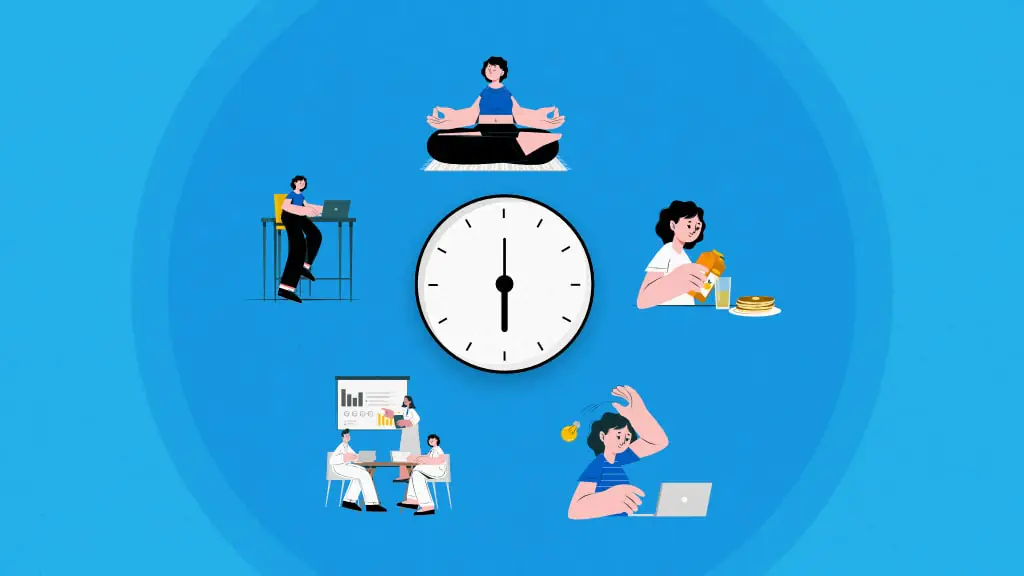
A morning routine optimized for creativity is not about rigid discipline—it is about strategic architecture. Neuroscience reveals that the groggiest, most unfocused moments after waking are precisely when creative insights are most likely to emerge, when the brain’s default mode network (DMN) operates with maximum diffuse attention. A well-designed routine preserves this vulnerable window before flooding the brain with external stimuli, while simultaneously building neurochemical resilience through deliberate activation of dopamine pathways. The evidence-backed foundation combines physiological priming (cold exposure, hydration, movement), cognitive priming (journaling, intention-setting), and temporal structure (90-minute ultradian cycles) to create a compound effect: each element reinforces creative capacity while reducing decision fatigue that depletes willpower by day’s end.
The research further demonstrates that consistency matters more than intensity—tracking habit streaks without perfectionism maintains motivation and prevents the motivational collapse that signals approaching creative burnout. Entrepreneurs, writers, designers, and strategists who implement these frameworks report sustained creative output, reduced anxiety around their work, and the ability to enter flow states with greater ease.
The Neuroscience of Morning Creativity
Why Your Grogginess Is an Asset, Not a Liability
Conventional wisdom suggests you should “wake up alert and focused.” The neuroscience contradicts this entirely. Research by Mareike Wieth and Rose Zacks demonstrates that imaginative insights emerge most readily when we are groggy and unfocused. The mental processes that inhibit distracting or irrelevant thoughts are at their weakest in these moments, allowing unexpected and sometimes inspired connections to be made across your knowledge network.
This phenomenon relates to how the brain’s attention systems operate. In the morning, before the prefrontal cortex (your “executive control” region) has fully activated, the default mode network—associated with internal thought, mind-wandering, and creative insight—dominates neural activity. The result is a “widened search” through your knowledge base: instead of filtering out tangential ideas as irrelevant, your brain makes unusual associations. This is precisely the cognitive flexibility required for breakthrough thinking.
The practical implication is profound: rushing through your morning, flooding your brain with stimuli (email, news, social media), or immediately demanding focus-intensive work directly opposes your brain’s natural creative state. Instead, the first 30–90 minutes after waking should be architectured to protect and amplify this diffuse attention.
Network Reconfiguration and Creative Switching
Creative thinking is not a single brain state; it is a dynamic dance between two competing networks. The default mode network (DMN) handles imaginative, associative, and internally focused thinking. The executive control network (ECN) handles analytical, focused, and goal-oriented thinking. Creative work requires rapid, seamless switching between these networks.
Neuroscience shows that creative idea generation involves significantly higher network reconfiguration than non-creative thinking. The brain must temporarily destabilize its connectivity patterns to achieve maximum flexibility. This reconfiguration is not something you can force through willpower—it emerges when the nervous system is in a particular state: physiologically calm yet neurochemically alert.
This explains why a morning routine that combines parasympathetic activation (meditation, slow breathing, gentle movement) with sympathetic stimulation (cold water, exercise, caffeine) creates the optimal conditions. You are essentially priming both systems to work in concert.
The Foundation: The Five-Element Morning Architecture
A sustainable creative morning routine rests on five interlocking pillars. They work synergistically; omitting one diminishes the effect of the others.
1. Physiological Reset
Water and Temperature Regulation
The first action upon waking should be rehydration. A full glass of water (ideally at room temperature or slightly cool) rehydrates the body after sleep and initiates the parasympathetic recovery process. This single act has measurable effects on cognitive function within 15–20 minutes.
Cold exposure, introduced deliberately at the end of a warm shower, creates a profound physiological stimulus. A 20–90 second exposure to cold water (between 40–60°F) triggers the sympathetic nervous system, elevating dopamine by up to 250% above baseline. Unlike caffeine, which spikes and crashes, cold-induced dopamine elevation sustains for hours, enhancing mood, focus, and motivation without the midday crash.
The sequence matters: warm shower first (allowing muscle relaxation and mental wandering), then cold exposure (triggering the neurochemical boost). Start conservatively—10–20 seconds of cool water if full cold feels overwhelming—and progress gradually. The discomfort is the signal; your brain interprets tolerating this voluntary stress as evidence of your resilience, subtly reshaping your self-narrative toward capability.
Movement and Physical Activation
Research on morning routines across entrepreneurs and creatives reveals that 15–60 minutes of movement (exercise, yoga, walking) significantly amplifies creative output. The mechanism operates on multiple levels: elevated endorphins, increased cerebral blood flow, and synchronization of the ultradian rhythm (the body’s natural 90-minute focus cycle).
Arthur Brooks, a leading happiness researcher, wakes at 4:30 a.m. and exercises in the gym within 15 minutes of waking. Choreographer Twyla Tharp begins each day with a specific warm-up ritual that signals to her body and mind that creative exploration is imminent. The physical movement need not be intense—even a 10-minute yoga flow or a walk outside provides measurable benefits.
2. Cognitive Priming Through Journaling
Free Writing and Mind-Clearing
Once your nervous system is activated (post-shower, post-movement), journaling becomes a powerful cognitive tool. The key is to abandon perfectionism entirely. Set a timer for 5–15 minutes and write whatever emerges—no editing, no judging, no agenda.
This practice serves dual functions. First, it externalizes mental clutter: worries, tasks, half-formed ideas flow onto the page, freeing working memory for creative work. Second, the act of writing (analog, on paper, or digital) accesses different neural pathways than reading or thinking; ideas that remain abstract in your mind often crystallize on the page.
Research in daily life studies shows that participants report increased everyday creativity when they begin the morning with positive and active emotions. Journaling, particularly gratitude-focused journaling, reliably shifts emotional tone.
Structured Prompts vs. Free Flow
Some creators prefer guided prompts (“What is my top priority today?” “What does my ideal outcome look like?”), while others thrive on unstructured mind-dumping. The evidence suggests alternating between both: structure on focused workdays, freedom on days when you sense stagnation.
A practical template includes:
- Daily Priority: One primary creative goal
- What’s on My Mind: Stream-of-consciousness dump
- Morning Gratitude: Three things, no matter how small
- Intention: How will my actions today reflect my values?
3. Meditative Calm and Parasympathetic Reset
Micro-Meditation (5–10 minutes)
After the sympathetic activation of cold water and exercise, the nervous system requires intentional downregulation. Even a brief meditation—5–10 minutes of focused breathing or body scan—activates the parasympathetic system, lowering cortisol and creating emotional stability.
Apps like Calm or Headspace provide guided sessions, but the simplest approach is box breathing: inhale for 4 counts, hold for 4, exhale for 4, hold for 4, repeat 5 times. The specificity of the count engages the prefrontal cortex just enough to prevent mind-wandering during this phase, while the rhythm naturally activates parasympathetic tone.
The neurochemical effect is measurable. Regular meditation practice strengthens the parasympathetic system over time, enhancing emotional regulation, resilience, and creative confidence.
4. Temporal Structure and Task Batching
The 90-Minute Ultradian Cycle
The human nervous system operates in approximately 90-minute cycles of activity and recovery. During the active phase (approximately 90 minutes), cognitive performance rises; after this window, attention and energy decline sharply unless a recovery break occurs.
For morning creative work, this means:
- Schedule your most cognitively demanding creative work (writing, design, strategic thinking) during your first 90-minute block, ideally between 60–90 minutes post-waking. By this time, your physiology is primed (cold-induced dopamine spike sustained), your mind is clear (journaling complete), and your nervous system is calm (meditation done).
- Follow with a 15–20 minute recovery break (no screens, ideally movement or time in nature).
- Build two or three such cycles into your day if possible, avoiding back-to-back intensive work.
Research shows cognitive performance declines dramatically when people push beyond 90 minutes without recovery; the incline in errors and reduction in creative flexibility is sharp and measurable.
Themed Focus Days
To prevent context-switching (a major productivity drain), batch similar creative tasks on designated days. For instance:
- Monday: Client or collaborative work
- Tuesday-Wednesday: Deep creative work (writing, design, strategy)
- Thursday: Brainstorming and exploration
- Friday: Review, refinement, and planning for the following week
This structure maintains novelty (dopamine response) while reducing the cognitive friction of task-switching.
5. Environmental Design
Biophilic Workspace Elements
Where you work matters as much as when and how. Research on office design reveals that employees in biophilic environments (incorporating natural light, plants, natural materials, water features) report a 15% increase in creativity and a 6% boost in productivity. Stress hormones decrease by up to 60%.
Practical implementation:
- Position your workspace near a window with natural light exposure or, if impossible, use a light therapy lamp to simulate dawn.
- Add living plants (even small potted plants on a desk) or a small water feature; the visual softness and gentle movement lower mental fatigue.
- Use natural materials (wood desk, cork pad, wool fabrics) rather than synthetic surfaces; the visual complexity and texture engage the brain’s “soft fascination,” a state of relaxed attention optimal for creative thinking.
- Minimize visual clutter: a clean, intentional workspace reduces cognitive load, leaving mental resources available for creative work.
The environmental effect is not merely psychological; it operates through measurable neurochemical pathways. Natural light suppresses cortisol and regulates circadian rhythm, supporting both focus and mood stability.
Putting It Together: Practical Routines at Three Time Scales
The architecture must adapt to individual schedules. Here are three evidence-backed templates, modifiable based on your constraints.
Option 1: The 90-Minute Intensive Routine
| Time | Activity | Duration | Purpose |
|---|---|---|---|
| 5:30 AM | Wake, hydrate | 5 min | Rehydration, parasympathetic prep |
| 5:35 AM | Cold shower (warm → 30 sec cold) | 5 min | Dopamine elevation, nervous system priming |
| 5:40 AM | Movement (yoga flow, run, walk) | 20 min | Cerebral blood flow, ultradian sync |
| 6:00 AM | Meditation or breathwork | 8 min | Parasympathetic reset |
| 6:08 AM | Journaling (free write + gratitude) | 12 min | Cognitive clearing, intention-setting |
| 6:20 AM | Coffee + light breakfast | 15 min | Nutrient refill, caffeine + cold dopamine |
| 6:35 AM | First 90-min creative work block | 90 min | Deep focus on primary creative task |
| 8:05 AM | Recovery break (walk, stretch, hydrate) | 15 min | Nervous system reset |
Outcome: You complete one full ultradian cycle of intensive creative work before 8:15 a.m. The neurochemical and cognitive priming ensures higher-quality output in those 90 minutes than many people produce in an entire day.
Option 2: The 60-Minute Efficient Routine
For those with constraints (early commutes, childcare):
| Time | Activity | Duration |
|---|---|---|
| 8:00 AM | Wake, hydrate, cold rinse | 5 min |
| 8:05 AM | 15-min sun salutation yoga + 5-min breathing | 20 min |
| 8:25 AM | Coffee + journaling (just three lines: priority, gratitude, intention) | 10 min |
| 8:35 AM | Quick breakfast | 15 min |
| 8:50 AM | Creative work begins | 60+ min |
Outcome: A streamlined sequence that preserves the neurochemical priming while acknowledging time constraints. The trade-off is less recovery; this routine works best for creatives with inherently high energy.
Option 3: The Flexible 30-Minute Minimum
When mornings are genuinely limited:
| Time | Activity | Duration |
|---|---|---|
| 7:00 AM | Wake, drink water, make bed | 5 min |
| 7:05 AM | Movement (mini dance, 10-min walk, stretch) + cold finish | 10 min |
| 7:15 AM | Gratitude or intention journaling | 5 min |
| 7:20 AM | Breakfast / get ready | 10 min |
| 7:30 AM | Transition to creative work | — |
Outcome: Even a minimal routine establishes ritual consistency, which research shows is more important than duration for habit formation. This serves as a foundation to expand as your schedule allows.
Sustaining Consistency: The Tracking Framework
Why Tracking Matters
The psychological principle of “don’t break the chain”—marking off each day you complete a habit—creates a visual feedback loop that sustains motivation far better than willpower alone. Each mark registers as a small dopamine reward, particularly effective because the reward is immediate and visible.
However, perfectionism is the enemy of consistency. A routine that requires 100% adherence will fail; one that allows flexibility and recovery wins long-term.
Implementation:
- Use a simple calendar, spreadsheet, or app (Streaks, Habitica, HabitNow, Way of Life all support this) to mark each morning you complete your routine.
- Define “completion” flexibly: If you hit 80% of your routine’s elements on a given morning (e.g., you skip meditation but do hydrate, move, journal), mark it as done.
- Allow 1–2 “skip days” per week guilt-free, particularly on high-stress days or after intense creative work.
- Track energy and mood alongside habit completion. Over weeks, patterns emerge—you’ll notice which routine elements most reliably lift your creative energy, allowing refinement.
Research on habit formation shows that consistency over 60–90 days creates genuine automaticity; the routine requires less conscious effort and becomes self-reinforcing.
Preventing Creative Burnout and Maintaining Dopamine Health
The Burnout Cycle
Paradoxically, sustained creative output depends on structured rest and variation. Pushing continuously without recovery depletes dopamine availability, leading to what researchers term “creative burnout”—a state where motivation collapses, output becomes forced, and the joy drains from the work.
The dopamine mechanism is instructive: sustained dopamine availability (through novelty, achievement, reward) fuels creative motivation. But dopamine is not infinite; excessive demands deplete it. Studies on Parkinson’s disease patients reveal that creativity is directly linked to dopamine agonist dosing, and reduces sharply when dopamine levels drop.
Preventative architecture:
- Build variation into your routine: Every 3–4 weeks, adjust your morning sequence—try a different movement practice, shift your meditation focus, change your journaling prompt. The novelty refreshes the dopamine response, preventing habituation.
- Schedule explicit recovery periods: Every 5–7 days, allow one morning where your routine is lighter, more restorative. The nervous system requires genuine downtime.
- Alternate project types: Don’t spend eight consecutive weeks on a single intense project. Rotate between challenging creative work and maintenance/refinement work. This prevents the depletion phase that precedes burnout.
- Limit screen-based work in mornings: Email, Slack, and notifications flood your prefrontal cortex before your creative system has fully engaged, leading to reactive rather than generative thinking. Protect your first creative block from digital input.
Recognition and Recovery
If you notice burnout symptoms (loss of motivation, inability to access ideas, anxiety about your creative work, emotional flatness), a 1–4 week recovery protocol can restore capacity:
- Week 1: Complete rest from creative work; engage in restorative activities (walking, nature, reading unrelated to your field).
- Week 2: Gentle, low-pressure creative exploration (sketching, freewriting, experimenting without outcome pressure).
- Week 3: Gradual return to structured creative work with reduced scope.
- Week 4: Rebuild with new boundaries (e.g., stricter recovery days, reduced project load, new collaborators).
This timeline reflects research on creative recovery; pushing back into full intensity before this cycle completes typically extends burnout rather than resolving it.
Troubleshooting Common Obstacles
“I’m not a morning person. Can I build this routine later in the day?”
Yes, with caveats. Chronotype (whether you’re naturally a morning or evening person) is real and somewhat genetic. However, research shows that the groggy-mind advantage for creativity exists in evening as well—if you’re a natural night owl, your equivalent optimal creative window is during your early evening wind-down. The architecture remains the same: protect your unfocused, diffuse-attention time before flooding your brain with stimuli. The cold shower equivalent might be an evening walk or cold-water hand immersion. Apply the same principles (hydration, gentle movement, journaling) offset by 8–12 hours.
“I travel frequently. How do I maintain consistency?”
Adapt the non-negotiable core elements: hydration, brief movement (even 10 minutes), and one journaling prompt. Environmental consistency matters less than ritual consistency. Many successful creatives maintain abbreviated versions of their routine while traveling—it signals to the brain that the creative mindset is active, even if full infrastructure isn’t available.
“My energy crashes by 10 a.m. despite the cold shower. What am I missing?”
Most likely cause: inadequate recovery from the previous day. Even one night of poor sleep significantly impairs creative capacity. Examine your evening routine: is your bedroom cool and dark? Are you off screens 30–60 minutes before sleep? The morning routine cannot override systemic sleep debt.
Secondary cause: insufficient carbohydrate and protein at breakfast. Dopamine synthesis requires amino acids (protein) and glucose availability. A breakfast of only coffee will crash; one with protein, complex carbs, and healthy fat sustains energy through the 90-minute cycle.
“I keep forgetting to track my habit. Does that break my streak?”
No. A missed day of tracking is not a failed day; it is merely unmeasured. What matters is the practice, not the perfect record. Many successful creatives use flexible tracking systems that allow “banking” skip days or forgiving lapses. The purpose of tracking is feedback, not punishment.
Implementation Checklist: Start This Week
Before your first morning:
- Prepare your space: clear workspace, position near window or set up lamp, place water glass by bed
- Choose your routine template (90-min, 60-min, or 30-min) based on your schedule
- Gather tools: thermometer (to ensure cold exposure is in optimal range), journal/pen, timer
- Download habit tracker app or print a paper calendar
Day 1:
- Set alarm 15 minutes earlier than usual; resist the urge to optimize everything at once
- Execute your chosen routine, honoring the sequence (hydrate → movement → meditation → journal)
- Mark completion in your tracker; note energy and mood in evening
- Observe without judgment; data collection mode, not performance mode
Days 2–7:
- Repeat routine daily; if you miss a day, simply resume the next morning
- Adjust one element if it feels misaligned (e.g., swap yoga for walking, adjust cold exposure duration)
- Track observations: which elements most reliably elevate your creative state?
Week 2–4:
- By day 14, the routine should feel less conscious; you’re entering automaticity
- Use data to refine: drop elements that don’t serve, emphasize those that reliably boost creativity
- Introduce variation (new journaling prompt, different movement, expanded meditation) to prevent dopamine habituation
Month 2–3:
- The routine is now largely automatic; creativity and focus should be noticeably more consistent
- Introduce strategic recovery days (lighter mornings, restorative focus)
- Plan your first 3-4 week variation cycle to refresh the dopamine response
Conclusion
A morning routine optimized for creativity is not a rigid prescription but a carefully orchestrated sequence of physiological, neurochemical, and cognitive priming. The research is clear: the window of grogginess after waking is a precious asset, not a liability. Protected from external stimuli and deliberately primed with cold, movement, and journaling, this window becomes your most productive creative hours.
The simplicity is deceptive. Each element—cold exposure, the 90-minute cycle, the protection of unfocused attention—is grounded in neuroscience. Together, they create a compound effect greater than the sum of parts. Consistency over perfection, flexibility over rigidity, and recovery alongside intensity are the unstated principles that separate sustainable creative practice from burnout.
The best routine is the one you will actually maintain. Start small, track what works, and refine iteratively. Within 60–90 days, this sequence becomes automatic—and your creative output, clarity, and resilience will measurably reflect that discipline.